COURSE BOOK
                <a href="https://www.instagram.com/normaliakusmayanti/" target="_blank" rel="noopener">
                    Instagram
                                        </a>
                <a href="https://www.youtube.com/channel/UCcoNQMbVSyQ2eNVdm5rpnUw/featured" target="_blank" rel="noopener">
                    Youtube
                                        </a>
                <a href="https://www.linkedin.com/in/ima-kusmayanti-6138a1ba/" target="_blank" rel="noopener">
                    Linkedin
                                        </a>
                <a href="http://[email protected]" target="_blank" rel="noopener">
                    Envelope
                                        </a>
        <h2>Course Books for Engineering Students</h2>
    <strong>By </strong>
Ima N. Kusmayanti, Retno Hendryanti, Florita Diana Sari
Course Books for Engineering Students
By
Ima Normalia Kusmayanti
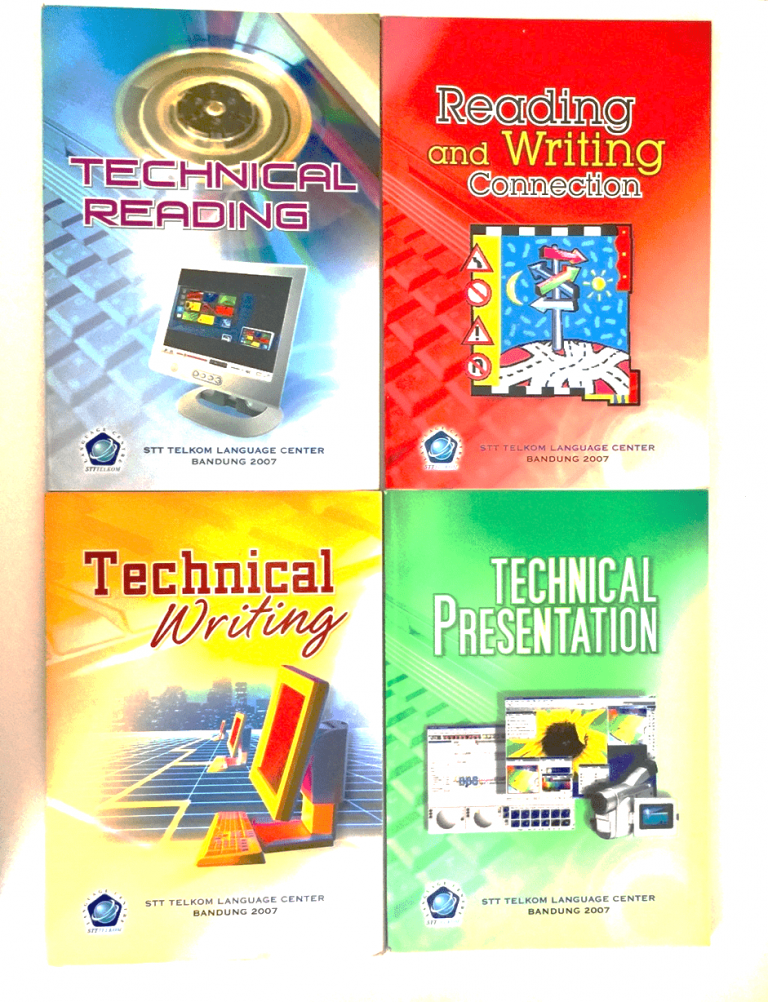
It was always vividly evident that the year of 2006 marked the beginning of my journey in writing academic textbooks. This was out of my comfort zone. I was really into writing literary works. But, I admitted that publishing literary works at that time was competitive and tough. So, I took a detour and accepted a task of writing four course books. Luckily, I had two amazing mentors, Retno Hendryanti (Bu Retno) and Florita Diana Sari (Mba Flo). Of course they had previous experiences in writing course books. We wrote four series of course books: Technical Reading, Reading and Writing Connection, Technical Writing and Technical Presentation for STT Telkom diploma students particularly in the field of Network Communication.
The first series prepared students to improve their reading skills, specifically, to assist them to comprehend expository texts. The course book was organized into nine sections including Getting Started, Glancing at Vocabulary, Reading Passage, Check Your Comprehension, Finding Details from the Text, Guessing Meaning from Context, Grammar Point, Grammar Exercise, and Extra Activity.
The second series introduced project proposals and reports to the students in the form of reading-writing practices. Each task was designed to enhance students’ reading skills leading them to improve their writing skills. Each unit consisted of four sections namely Getting in the Zone, Vocabulary Exploration, Grammar Point, Reading Passage, and Reading-Writing Activity.
The third series assisted students to practice writing descriptive, procedural texts and proposals with topics related to their current study. Each task was designed to enhance students’ collaborative writing skills since some of the tasks were to be completed in groups. Each unit consisted of four sections including Overview, Language Convention, Writing Activity, and Extra Activity.
The fourth series helped students to practice their English speaking skills, particularly in the area of project’s proposal presentation with topics related to their current study. Each task was designed to enhance students’ collaborative speaking skills since some of the tasks were to be completed in groups. Each unit consisted of three sections namely Getting in the Zone, Language Convention, and Speaking Activity.
We used these books for about four semesters. Whenever I see these books on my bookshelf, I remember the endless, yet stirring nights. Although in the process, I lost hours of sleep, it was worth it.